Why some security awareness training programmes fall short (and how to achieve lasting behavioural change)

Security awareness training helps employees recognise cyber threats and handle information securely. This not only protects your employees but also your organisation. After all, everyone has a role to play in strengthening cyber security.
However, security awareness training does not always deliver the desired results. Employees complete their training but continue to make the same mistakes in practice. Not only is this a waste of time and investment, but it also leaves your organisation vulnerable to cyber threats.
So why do some training programmes fail to make a real impact? In this blog, we explore the most common mistakes organisations make in their security awareness approach. We also look at how to build an effective awareness campaign that strengthens your organisation's security.
Recognising ineffective security awareness training is not always straightforward. A high completion rate, for example, is a positive sign, but it reveals little about how employees actually behave in practice. However, there are several warning signs that may indicate your security awareness training is missing the mark:
It is important to remember that these warning signs do not necessarily mean your training is ineffective. Clicking on a phishing link, for example, may also be the result of time pressure, distractions or unclear working procedures.
Nevertheless, these signals provide a valuable opportunity to identify where behaviour within your organisation could be improved. Ultimately, the goal is not simply for employees to know what secure behaviour looks like, but to put that knowledge into practice.

When employees fail to demonstrate the desired behaviour, a lack of knowledge is not always the underlying cause. Employees may be aware of cyber risks and threats, yet still act insecurely under certain circumstances or without the right motivation.
Knowledge is therefore essential, but rarely sufficient on its own to achieve lasting behavioural change.
Several factors can limit the effectiveness of security awareness training:
The ultimate goal of security awareness is not to have employees complete as many training modules as possible or simply tick a box for compliance or an audit. What really matters is helping employees make more informed, secure decisions.
Effective security awareness training contributes to behavioural change that extends beyond the training environment.
To achieve this, training should be relevant to the people within your organisation. Someone working in finance, for example, faces different cyber risks from someone working in healthcare. By using familiar situations and practical examples, training becomes more relevant and employees can apply what they have learnt more easily.
The way training is delivered also makes a difference. Short, interactive training modules make learning more accessible and can even make acquiring new knowledge enjoyable.
Ultimately, successful security awareness training should translate into more secure behaviour. You will see this not only in your reports, but also in everyday workplace practices. For example, employees may become more alert and more confident about when to report suspicious activity, leading to an increase in reported incidents. You might also notice more conversations about information security around the coffee machine or fewer common mistakes, such as emails being sent to the wrong recipients.
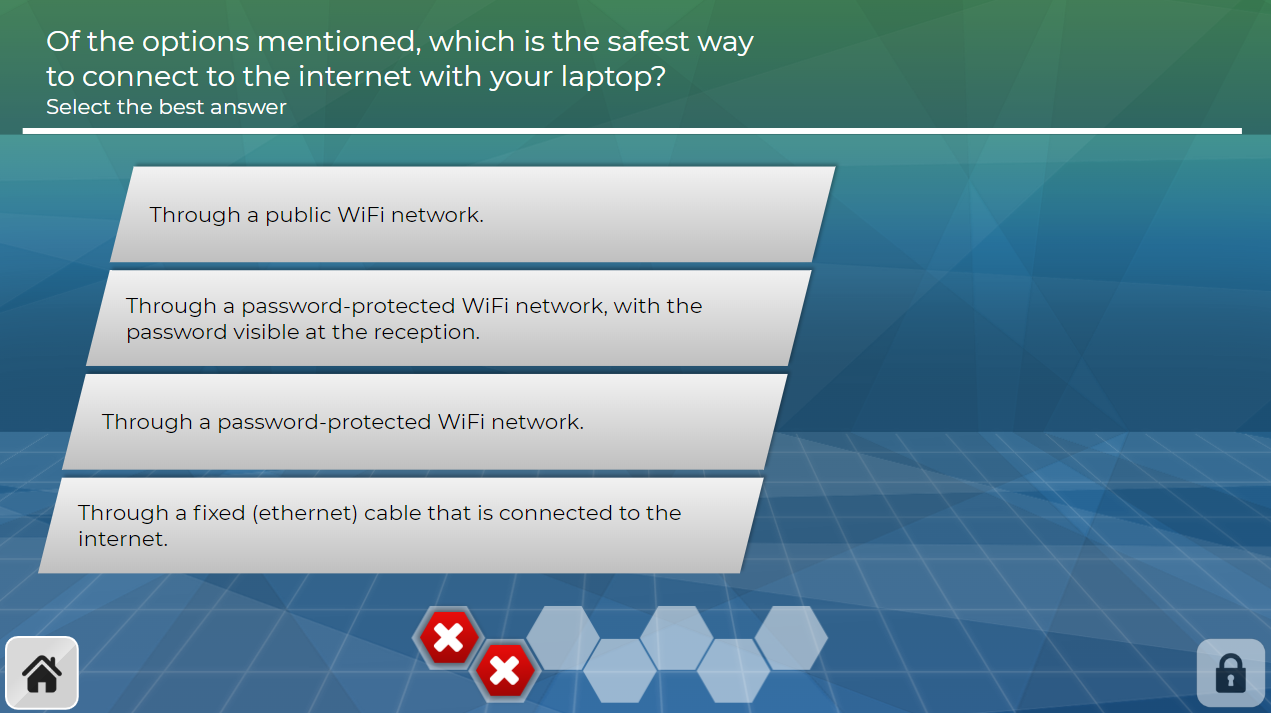
Behavioural change does not happen overnight. Nor is it something you can achieve through just a handful of initiatives. Lasting behavioural change requires a structured approach and ongoing awareness campaigns. Building a strong security culture is a continuous process of reflection, evaluation and improvement. Even organisations with a high level of cyber security maturity regularly review and refine their security awareness approach.
Increase employee engagement and build a stronger security culture. Awaretrain's security awareness training is grounded in behavioural science, helping organisations communicate security messages effectively and encourage employees to make safer decisions. Our short, practical training modules make it easy to put new knowledge into practice. Rather than relying on lengthy theoretical explanations, we use realistic situations that employees can relate to. This allows them to apply what they have learnt immediately, both at work and at home.
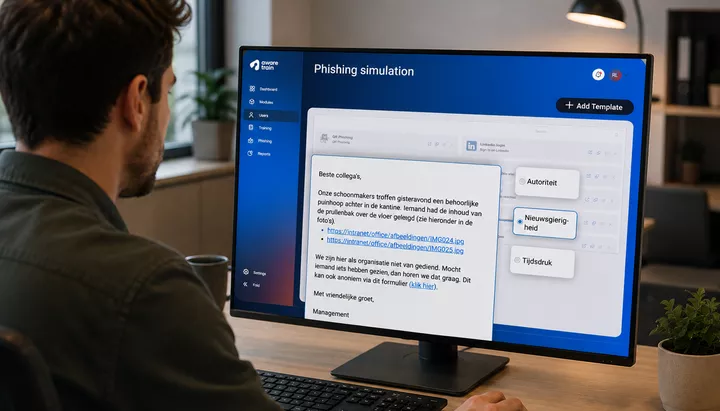
With Awaretrain, you have complete control over your security awareness training, phishing simulations, user management and reporting. Our extensive content library is continuously updated to reflect the latest relevant developments in the cyber threat landscape, helping your organisation stay informed and prepared. Awaretrain is known for its ease of use and effective training programmes. But don't just take our word for it – hear what our customers have to say.
Try Awaretrain free for 28 days, with no obligation, and discover why more than 1,000 organisations choose our platform.
Explore our practical training modules, experience how easy the platform is to use and take the next step towards building a stronger security culture.

Training modules
Customers worldwide
Employees trained

Step aboard and build lasting security awareness with Awaretrain.