On the road, not off the hook: how to raise security awareness among mobile workers

In the logistics sector, your business runs on the efforts of employees who are constantly on the move, getting goods from point A to point B. Long hours, tight schedules and the need for constant vigilance are all part of the job. So adding cybersecurity to their already packed agenda might feel like bad timing. But what if there was a better way? Let’s start with a simple question: why should a driver or a shipper even care about information security? They’re not sat behind a desk all day, so surely they’re less exposed to digital threats… or are they?
Cybercriminals aren’t just targeting desktop computers anymore. These days, everyone carries a mini computer in their pocket: the smartphone. It’s an essential communication tool for staff, but it also makes them a target. And cybercriminals know exactly how to exploit that.
But cybersecurity goes beyond phones. Think of onboard computers, ERP systems and digital tachographs. These are all devices that are constantly sending and receiving data. It might seem harmless that someone knows where a truck is and when it’ll arrive. But in the wrong hands, that data can be used to hijack a shipment or launch a targeted attack.
Picture this: a driver stops at a petrol station and logs in to the free Wi-Fi. Without him or her even realising, they connected themselves to a fake hotspot. An “evil twin” network that looks legitimate but intercepts all data traffic. The moment they log in to the transport management system or check their email, hackers gain access to their login details. That information can later be used to infiltrate the company’s network, manipulate delivery routes, or steal sensitive data.
And that’s just one scenario. There are countless other risks mobile workers may face. Social engineering (where criminals manipulate people into helping them) plays a huge role in attacks. Think voice phishing, pretexting or man-in-the-middle attacks. Cybersecurity is no longer something that only concerns office workers. So how do you ensure mobile employees understand the risks and actively contribute to a safer working environment?
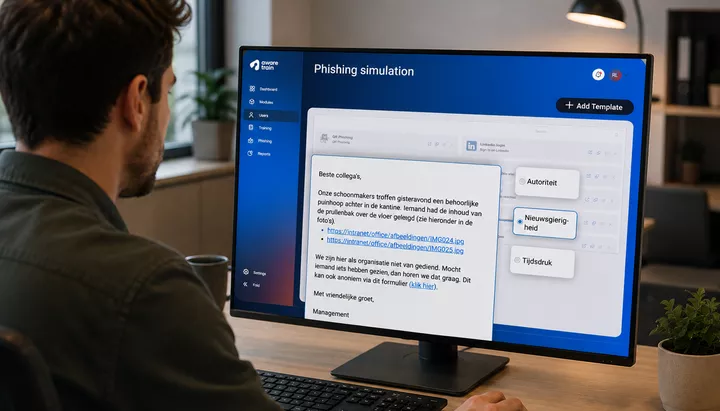
Phishing simulations are a hands-on way to raise awareness and keep people alert. Employees receive realistic fake phishing messages on their phones or computer, mimicking the tricks criminals use.
Why do they work?
Security awareness should begin on day one. By including it in your onboarding programme, you lay a solid foundation. Make sure new hires understand the risks they may encounter on the road and know how to respond in suspicious situations.
Key onboarding topics:
Drivers, warehouse staff, dockworkers and loaders aren’t sitting in an office where they can just pop over to IT. That’s why it’s important to create accessible ways to report suspicious activity.
Examples include:
Best practice shows that awareness is most effective when it’s made mandatory, just like a driving licence or a safety certificate. Without the basics, you shouldn’t be on the job.
Benefits:
Security awareness isn’t a burden, it’s a necessity. Especially in sectors where mobility is key, your people are your first line of defence. The key is to make learning easy, relevant and accessible, no matter where your employees are.

Training modules
Customers worldwide
Employees trained

Step aboard and build lasting security awareness with Awaretrain.