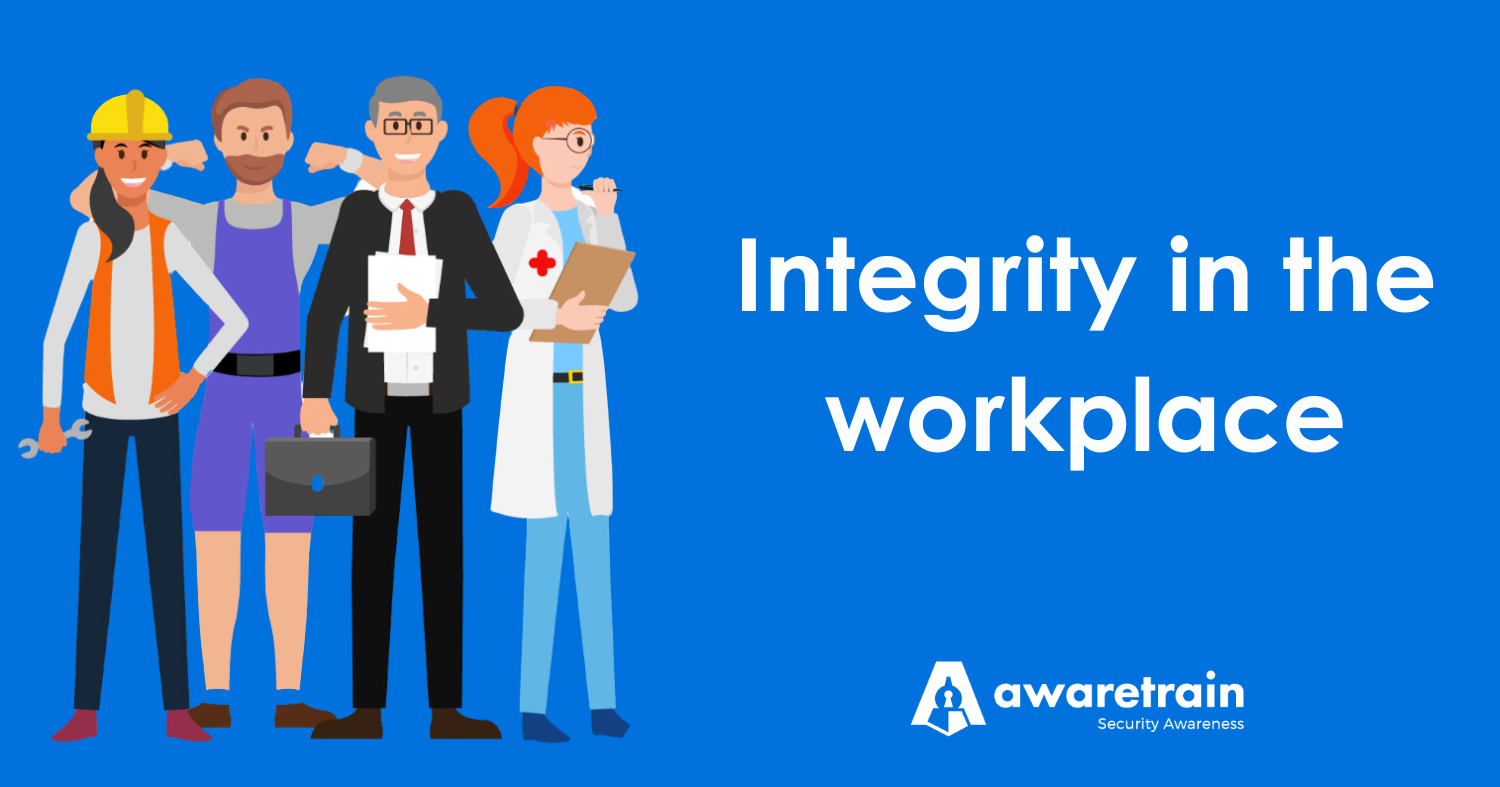
Integrity in the workplace
In an organisation, you work with people who each have their own moral and ethical compass. Still, you want to create an environment where everyone feels free and safe to act according to shared company values and common goals. Integrity plays a vital role here. In this blog, we’ll explore what integrity in the workplace really means and how to put it into practice.
Table of contents:
Integrity encompasses a range of qualities, such as honesty, consistency, sincerity, and the commitment to strong moral or ethical standards. However, what counts as “acting with integrity” isn’t always easy to define and can depend on various factors.
Acting with integrity often involves balancing different interests. In some cases, there may be no clear “right” or “wrong,” and what is considered ethical may vary depending on culture, context, and individual perspective.
Although the concept of integrity is similar for both individuals and organisations, there are a few additional considerations for companies. For instance, employees may sometimes need to follow rules that might not fully align with their personal values. In such cases, it’s essential for organisations to foster an open, supportive culture where colleagues can help each other stay aligned with the organisation’s ethical standards.
For organisations, integrity goes beyond the internal team; it also involves transparency and accountability toward clients, suppliers, stakeholders, and society. Since there’s no legal definition of integrity, each organisation must set its own guidelines to clarify what integrity means within their context. These guidelines are often included in a code of conduct or ethics policy. However, it’s not enough to simply establish these guidelines; organisations must also actively uphold and enforce them.
A code of conduct or an ethics policy provides guidance to employees and helps clarify what integrity means within the organisation. It outlines the ethical standards everyone is expected to follow, explains how to report breaches, and defines the consequences of violations.
Nearly every organisation has some form of a code of conduct or an ethics policy, but employees are often only vaguely aware of it. Clear communication about these policies can help avoid confusion, unawareness, and potential issues within the company.

Everyone within an organisation is expected to follow the rules and agreements in place. However, there may be times when someone doesn’t comply or needs to deviate from policy. These instances are considered breaches of integrity and can range from minor infractions to serious violations. Examples include:
Serious breaches of integrity can lead to financial losses, legal consequences, and damage to the organisation’s reputation. Preventing these situations is crucial for the continuity and credibility of the business.
Most organisations have a policy in place on how to handle breaches of integrity, and the consequences often vary depending on the severity of the violation. Minor infractions may be followed by a warning, while more serious violations could result in immediate dismissal or legal consequences.
It’s important to remember that not all breaches of integrity stem from malicious intent. Sometimes personal issues or external pressures can lead someone to deviate from the code, while in other cases, a lack of awareness may be the cause.
If a colleague feels they need to deviate from policy or is unsure about the most ethical choice, they should consult a supervisor, HR representative, or trusted advisor within the organisation. It’s also a good idea to document the decision-making process, explaining why the deviation was necessary. While this may not alter the consequences, it demonstrates a commitment to transparency and integrity.
Everyone has a slightly different understanding of what integrity means. Within an organisation, it’s crucial to ensure that everyone shares the same understanding. With Awaretrain’s online integrity training, you can engage your entire team in learning about integrity and how to apply it in day-to-day situations. Through realistic scenarios from 12 different industries, your team will be challenged to make ethical, well-considered choices in their daily work. Even in complex situations, they’ll learn to make fair and responsible decisions.
Get to know our “Integrity in the workplace” module on Awaretrain. Don’t have an account yet? You can try our security awareness platform for free by creating a test account here.
1. Communicate the code of conduct clearly
Make sure your code of conduct isn’t buried somewhere on the intranet where no one will ever find it. Actively communicate its importance during onboarding and regularly in team meetings.
2. Lead by example
When employees see that integrity is valued at all levels, including management, they are more likely to adopt the same standards. Leaders can demonstrate this by being transparent about decisions and taking responsibility for mistakes.
3. Offer regular integrity training
Regular training sessions can help employees become more aware of their own behavior. Awaretrain’s “Integrity in the workplace” training, developed in collaboration with integrity experts, uses realistic scenarios from 12 industries to guide employees in making ethical choices, even in challenging situations.
4. Provide confidential reporting channels
Create an open reporting culture by establishing independent officers, trusted contacts, or a reporting hotline. Make sure employees know who these contacts are and how they can make a report if needed.
5. Reward integrity
Show that integrity is valued by recognizing and rewarding ethical choices. Acknowledge employees who thoughtfully justify their decisions, act according to ethical standards, and take responsibility for their actions. This demonstrates that integrity is as important as achieving results.

Training modules
Customers worldwide
Employees trained

Step aboard and build lasting security awareness with Awaretrain.